| Citation | Rigoberto Juarez-Salazar, Victor H. Diaz-Ramirez, and Carlos Robledo-Sanchez, “Ray-tracing computations for structured-light projection systems with mirrors and windows” Applied Optics, Vol. 65, Issue 25, pp. 8840-8848 (2026). DOI: https://doi.org/10.1364/AO.606131 |
| Links | Full Article BibTeX More Papers |
What is it about? Español
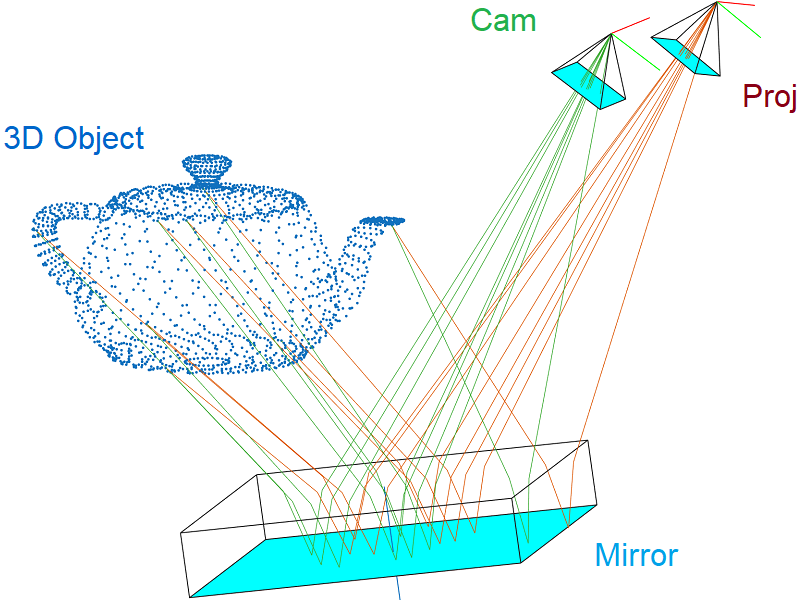
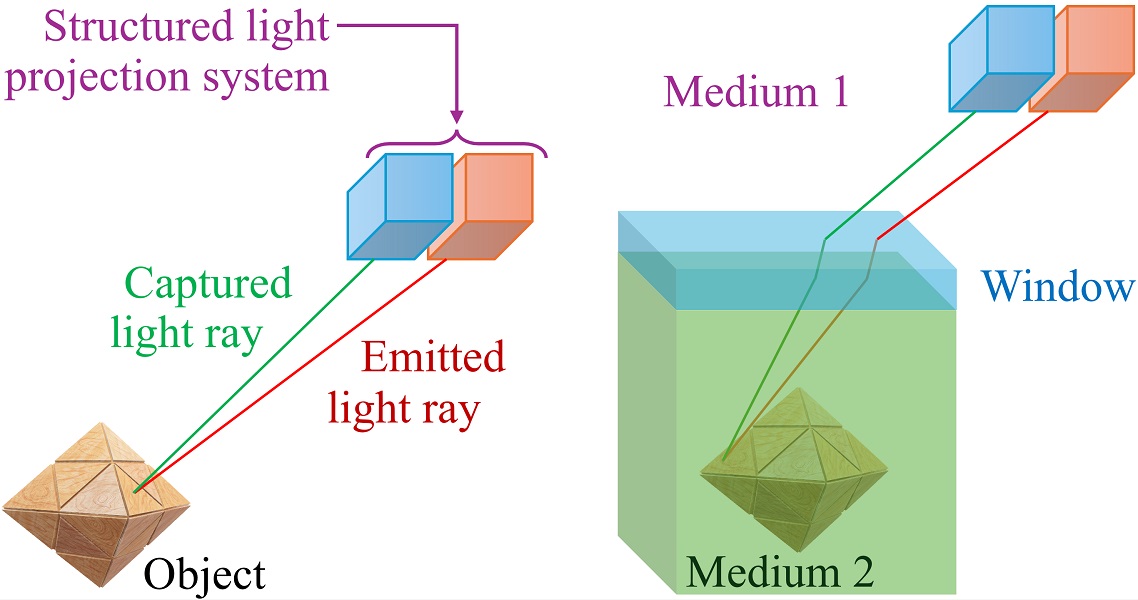
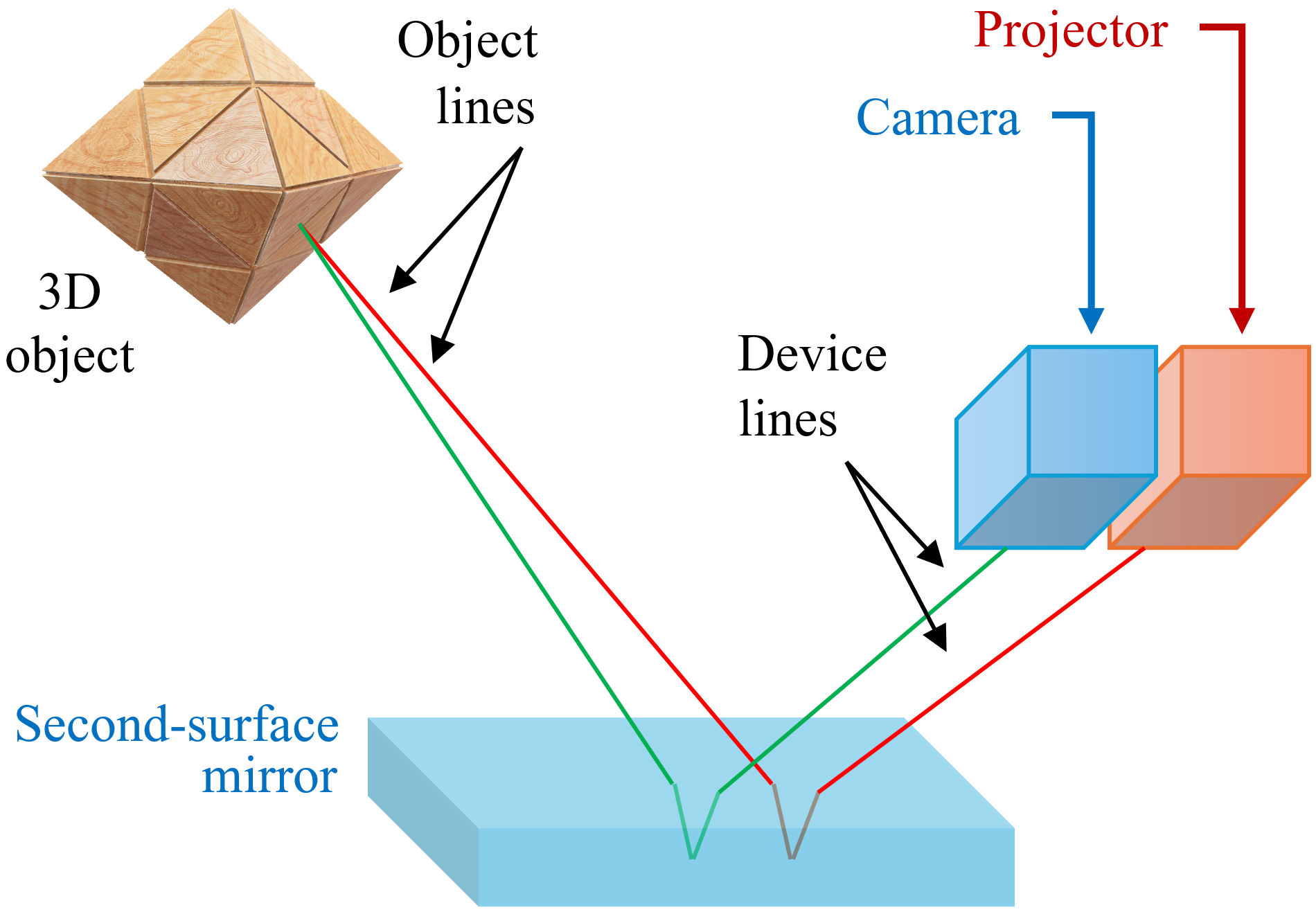
Certain applications utilize mirrors to increase the field of view of structured-light projection systems. In other cases, the camera and projector are enclosed within a protective case, allowing observation of the object under study through optical windows. In these applications, reflection and refraction phenomena modify the direction of emitted and captured light rays. To ensure accurate 3D object reconstruction, this paper presents the ray-tracing computations needed to address reflection and refraction in structured-light projection systems.
Why is it important?
This study develops four representative applications: (1) extended-view imaging using first-surface mirrors, (2) reconstruction of immersed objects, (3) object reconstruction through optical windows, and (4) extended-view imaging using second-surface objects. These applications provide a general framework for adapting the developed ray-tracing computations to other configurations and applications of structured-light projection systems.
Perspectives
This paper provides useful fundamentals for designing advanced optical arrangements and implementing efficient models for precise 3D object reconstruction in the presence of reflection and refraction phenomena.